

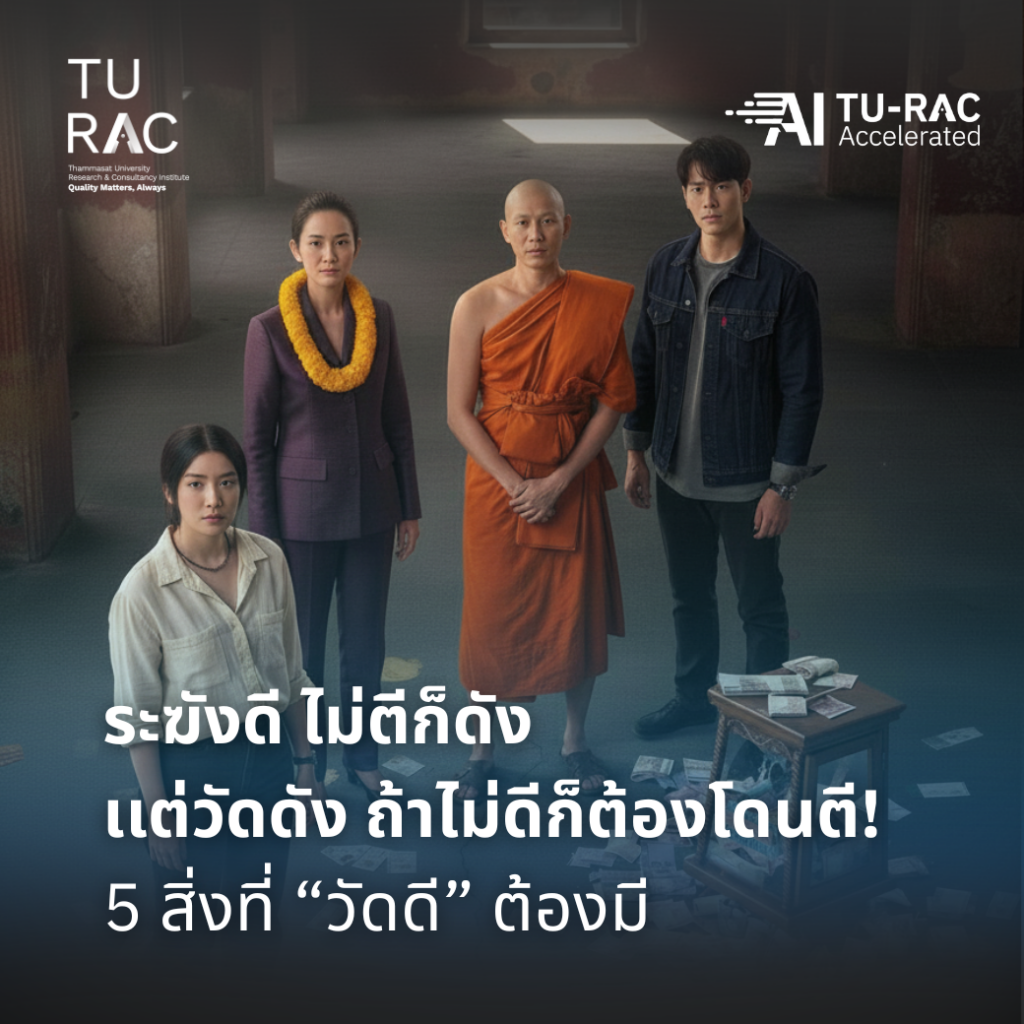
🔔 ระฆังดี ไม่ตีก็ดัง… เเต่วัดดัง ถ้าไม่ดีก็ต้องโดนตี !
5 สิ่งที่ “วัดดี” ควรมี
.
กระแสซีรีส์สายเสียดสีสังคม ทำให้หลายคนตั้งคำถามว่า
“เราควรไปวัดแบบไหน ทำบุญกับที่ไหน ถึงจะสบายใจจริง ๆ?”
จากบทความ “การประเมินวัดต้นแบบลดปัจจัยเสี่ยงเพื่อพัฒนาเครือข่ายลดปัจจัยเสี่ยงตามแนวพระพุทธศาสนา” ตีพิมพ์ในวารสาร สังคมวิจัยและพัฒนา (JMARD) สถาบันวิจัยและให้คำปรึกษาแห่งมหาวิทยาลัยธรรมศาสตร์ โดยพระศรีสมโพธิ (วรัญญู สอนชุน), พระมหาเสรีชน นริสฺสโร, ภูเบศ วณิชชานนท์, นนท์ปวิธ ศรีเทพ, นัชชา ทากุดเรือ, บุษยมาส เสือโพธิ์
บทความนี้อธิบายว่า วัดที่ดี ไม่ได้วัดจากยอดเช่าบูชา หรือจำนวนไลก์ในเพจ
แต่ดูจาก “ระบบหลังบ้าน” ที่เข้มแข็ง โปร่งใส และเคารพต่อความศักดิ์สิทธิ์ของพื้นที่
🔍 บทความระบุว่า วัดที่ดีควรมี…
✔️ การจัดการโปร่งใส ตรวจสอบได้
✔️ พื้นที่ปลอดภัย ทั้งทางกายภาพและทางศีลธรรม
✔️ การมีส่วนร่วมของชุมชน ไม่ใช่สงฆ์ทำงานคนเดียว
✔️ การใช้ทรัพยากรเหมาะสม ไม่ฟุ่มเฟือย ไม่หวังผลทางธุรกิจ
✔️ รักษาบทบาทวัดในฐานะ “ศูนย์กลางจิตใจ”
✨ เพราะวัดที่ยั่งยืน ไม่ได้สร้างด้วยคอนกรีต
แต่สร้างจาก “ความเชื่อใจของผู้คน”
📖 อ่านบทความฉบับเต็มได้ที่
👉 https://he02.tci-thaijo.org/index.php/JMARD/article/view/264470?utm_source=chatgpt.com
🔔 Good Bells Don’t Need Ringing to Be Heard… But a Famous Temple That Isn’t Good Must Be Struck!
5 Things a “Good Temple” Should Have
The trend of social satire series has led many people to question: “What kind of temple should we go to, and where should we make merit to truly feel at peace?”
From the article “Assessment of Prototype Temples for Reducing Risk Factors to Develop a Network to Reduce Risk Factors in Accordance with the Buddhist Religion” published in the Journal of Multidisciplinary Academic Research and Development (JMARD), Research and Consulting Institute, Thammasat University, by Phrasrisombhot (Waranyu Sonchun), Phramaha Serichon Narissaro
, Phoobade Wanitchanon, Nonpawit Sreetape, Natcha Takudrua, Busayamas Sueapho.
This article explains that a good temple is not measured by the number of amulets rented or the likes on its page, but by its strong, transparent, and respectful “back-end system” for the sanctity of the space.
🔍 The article states that a good temple should have…
✔️ Transparent and Auditable Management
✔️ A Safe Space, both physically and morally
✔️ Community Participation, where the monastic community does not work alone
✔️ Appropriate Use of Resources, not extravagant and not seeking commercial gain
✔️ Maintained Role of the Temple as a “Spiritual Center”
✨ Because a sustainable temple is not built with concrete, but built from “the trust of the people.”
📖 Read the full article here: 👉 https://he02.tci-thaijo.org/index.php/JMARD/article/view/264470?utm_source=chatgpt.com
